
 Call Center
AI Receptionist vs Human Receptionist: Which Is Better?
Beatha Beichumila
Last Updated :
22nd November 2026
By Fauzia Ibrahim
Product Specialist
Share this article with your friends
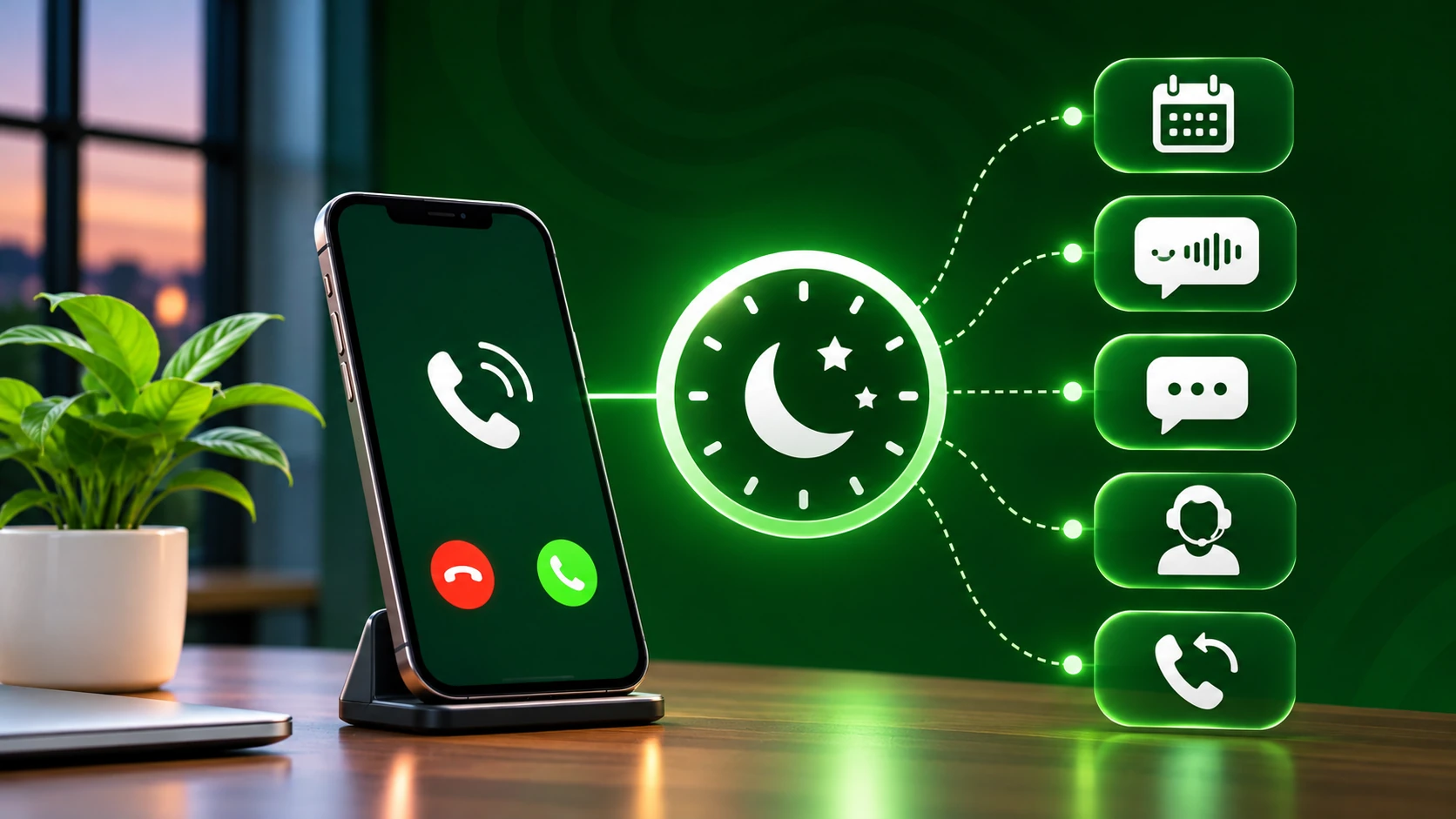
After-hours call answering is how a business deals with calls that come in when the office is closed. A good setup has four parts. Callers hear a short out-of-office message that gives your opening hours. Each caller gets an automatic text so they know they were seen. Urgent calls go to a named person on call or to an AI receptionist. Someone clears the list of missed calls when the business opens the next morning.
Your shop closes at 6 pm, but customers keep calling. A parent wants to know if school fees can be paid on Saturday. A tourist in Europe wants to book a safari, and it is mid-afternoon where she is. A solar customer's power has gone off at 9 pm. Most of these calls ring out. Some go to the owner's personal phone, which may or may not be answered, and the rest disappear. By morning, nobody knows who called or what they wanted.
This guide shows you how to set up after hours call answering that suits a Tanzanian business. You will learn which calls really arrive after closing time, the options for handling them and what each one costs in effort. It also gives you a seven-step setup with ready-to-use Swahili and English scripts, plus a fair way to share night cover among your staff. The advice comes from how businesses here actually take calls: callers use any network and often basic phones, they switch between Swahili and English, and they expect a call back the same day or first thing the next morning.
After-hours call answering is the plan your business follows for calls that arrive when nobody is scheduled to pick up. That covers evenings, nights, Sundays, public holidays and the lunch hour if your team takes one together. The aim is not to answer every call live around the clock. It is to make sure no caller is left with silence and no call is lost without anyone knowing.
A complete after-hours plan answers four questions. What does the caller hear? What does the caller receive afterwards? Who deals with the calls that cannot wait? And who calls everyone else back, and when?
Any call that comes in outside the hours you publish counts as an after-hours call. Many businesses find that they get more of these calls than they thought, because a lot of customers can only call outside their own working hours: employees calling after work, traders calling once the market closes, parents calling once the children are asleep. Hotels, tour operators and exporters also get calls from other time zones, where the caller's working day overlaps with your evening.
There is also a second, hidden group: calls that come in during your opening hours that nobody answers, for example during a staff meeting, prayer time or a power cut. These need the same treatment, so the setup in this guide covers them too.
A caller who rings after hours is often a strong lead. People rarely call a business at 8:30 pm out of idle curiosity; they call because they have a need that is on their mind right now. If they hear nothing, the next number on their list is a competitor, and that competitor may answer.
Mobile phones are everywhere in Tanzania. The latest communication statistics from the Tanzania Communications Regulatory Authority show more active mobile subscriptions than people, so the people who call you at night are your ordinary customers. If you want to put a figure on what unanswered calls cost you, our guide on how many sales your business is losing through missed calls walks you through a simple three-step calculation.
In most small and medium businesses, one of three things happens, and none of them works well.
The first is that the call rings out. The caller hears ringing, then nothing. They do not know whether the number is right, whether the business still exists or whether anyone will ever see the call. Many will not try again.
The second is that the call goes to the owner's or a manager's personal phone. This feels responsible, but it wears people out, it depends on one person being awake and available, and it leaves no record the rest of the team can see. When that person travels, falls ill or leaves the company, the after-hours line goes with them.
The third is network voicemail. Few Tanzanian callers leave voicemail messages, and few businesses check voicemail reliably, so messages sit unheard for days.
What these three have in common is that the caller gets no clear answer and the business gets no clear list. After hours call answering fixes both of those problems.
There are six main options, and most businesses combine two or three of them. The table below compares them on what the caller experiences, how much staff time they take and when they fit best.
Option | What the caller gets | Staff effort | Best for |
|---|---|---|---|
Out-of-office message | Your hours and what happens next | None after setup | Every business, as the base layer |
Missed-call text back | An SMS (or WhatsApp) confirming the call was seen | None after setup | Every business, paired with the message |
On-call staff | A live person for urgent issues | One person per night or weekend, by rota | Clinics, utilities, schools with boarders, logistics |
AI receptionist | Answers to common questions in Swahili or English, and a handover when needed | Low, once trained on your information | Businesses with repeat questions about hours, prices, location and bookings |
Outsourced answering service | A person who takes messages | Low for you, ongoing cost per call or month | Larger firms with steady night volume |
Extended or shift hours | Live answering for longer | High: more staff, night-work rules apply | Contact centres and enterprises |
An out-of-office message is a short recorded greeting that plays when you are closed. It tells callers your hours, when you will call back and what to do if the matter is urgent. It costs nothing to run and it changes the caller's experience straight away: instead of hearing ringing that goes nowhere, they learn something useful.
A missed-call text back sends the caller an automatic SMS after the call ends. It confirms that you saw the call and tells them when you will reply. Because it arrives as an ordinary SMS, it works on basic phones too. Some systems can also send a WhatsApp message, which lets the caller reply with their question in writing. Our step-by-step guide to setting up a missed call text back covers the settings in more detail.
With an on-call rota, a named team member takes urgent calls on a mobile phone for a set night or weekend. Calls are forwarded to that person, ideally only for matters that really cannot wait until morning. This keeps a human available without asking everyone to be reachable all the time. Our guide to setting up call forwarding for your business number explains how forwarding to a mobile works.
An AI receptionist answers the call by voice, understands the caller's question and replies from information you have given it, such as opening hours, prices, location, admission dates or booking rules. When it cannot help, or when the caller asks for a person, it passes the call on or takes the details for the morning. If you are new to the idea, read what an AI receptionist is and how it answers calls around the clock.
An answering service is an outside company whose staff answer your calls by name and pass on messages. It gives callers a human voice, but the agents only know what you write down for them, they usually cannot take decisions, and the cost rises with call volume. It suits larger firms more than small businesses.
Some businesses solve the problem by staying open longer, with an evening or night shift. This gives the best caller experience and costs the most. It also brings legal duties around night work, covered later in this guide.
Give Every After-Hours Caller a Clear Answer
Get one business number with an out-of-office message, an automatic text back and a call-back list for every missed call.
Get Your Business NumberThe seven steps below take a business from calls ringing out at night to a routine where no caller is left without an answer. Most businesses can complete them in a week.
Look at your call records for two to four weeks and count calls by hour and by day. If you do not yet have a call log, ask whoever holds the business phone to write down the time of every call, answered or missed, for one week. You are looking for the hours with the most calls outside opening time.
Patterns are often clear. A retailer may find a cluster between 6 pm and 8 pm. A school may find a spike on Sunday evenings before the week starts. A tour operator may see calls late at night that match morning hours in Europe or the United States. These patterns tell you where live cover is worth paying for and where a message and a text back are enough.
Decide your official hours for each day of the week, and write down how you handle public holidays, Ramadan opening hours if they differ, and any planned closures such as stocktaking. Then set the same hours on your phone system, your website, your Google Business Profile and your WhatsApp profile, so customers see one consistent answer everywhere.
Inconsistent hours cause more after-hours calls. If Google says you close at 7 pm but your phone system switches to the out-of-office message at 5 pm, callers between 5 pm and 7 pm will be confused and annoyed.
Keep the message under 20 seconds. Callers want three things from it: confirmation that they called the right business, your opening hours and what happens next. Start in Swahili and then repeat it in English, or choose the order that matches most of your callers.
Swahili script:
"Karibu Mushi Traders. Kwa sasa tumefunga. Tunafungua Jumatatu hadi Jumamosi, saa mbili asubuhi hadi saa kumi na mbili jioni. Tutakutumia ujumbe mfupi na tutakupigia simu kesho asubuhi. Asante kwa kupiga."
English script:
"Welcome to Mushi Traders. We are closed right now. We are open Monday to Saturday, 8 am to 6 pm. We will send you a text and call you back tomorrow morning. Thank you for calling."
If you have an on-call line for emergencies, add one sentence such as: "For an urgent fault, press 1 to reach our on-call technician." Only offer this if someone really is on call. A press-1 option that also rings out is worse than none. For more scripts you can adapt, see our guide to creating an IVR phone menu in Swahili and English
If you record calls at any time, mention it in your main greeting as well, for example "Simu hii inaweza kurekodiwa kwa ajili ya huduma bora" or "This call may be recorded to improve our service."
Set your system to send every after-hours caller a text as soon as the call ends. Keep the text short, give your opening time and invite the caller to reply with their question, so your team has context before calling back.
Swahili text:
"Asante kwa kupiga Mushi Traders. Tumefunga kwa sasa. Tutakupigia kesho saa 2 asubuhi. Unaweza kujibu ujumbe huu na swali lako."
English text:
"Thank you for calling Mushi Traders. We are closed now. We will call you back at 8 am tomorrow. You can reply to this message with your question."
SMS reaches every phone, including basic handsets. If your customers mostly use smartphones, a WhatsApp follow-up lets them send photos, locations or order numbers. Note that WhatsApp business messaging follows Meta's rules on when and how businesses can message customers, set out in the WhatsApp Business Messaging Policy Notify Africa's WhatsApp marketing platform is built around those rules, and Bulk SMS handles the text side.
Write a short list of situations that cannot wait until morning. For a clinic, that might be a patient with worsening symptoms after a procedure. For a solar or utility company, a dangerous fault. For a boarding school, a parent who cannot reach their child. For a logistics company, a driver stuck at a checkpoint. Everything else waits for the morning call back.
Then build a fair rota. Name one person for each night and weekend, publish the rota a month ahead, and agree how quickly they should respond. Give the on-call person a short guide covering what to fix themselves, who to escalate to and what to write down. Without a written list of what counts as urgent, the on-call person ends up answering every call, and that does not last.
Look at your call log from Step 1 and list the questions that come up again and again. In most businesses, the top five are opening hours, location, prices, whether an item is in stock, and how to book or pay. These are exactly the calls an AI receptionist handles well, because the answers do not change from caller to caller.
Give the AI receptionist accurate, up-to-date information, decide which questions it should always hand to a person, and test it in both Swahili and English before going live. Our guide on how to set up an AI receptionist for your business in Tanzania takes you through this step by step.
After-hours handling only works if the morning call backs happen. Assign one person to work through the overnight missed calls within the first hour of opening. Start with callers who called more than once, then callers who replied to the text with a question, then everyone else.
Make the call back easy for the customer to recognise. Introduce the business by name, mention that they called last night and get straight to their question. Then mark the call as done so nobody calls the same person twice. Our guide on how to manage customer calls when several staff answer the phone (https://notify.africa/blogs/manage-business-calls) covers how to give every missed call one clear owner.
Not Sure Which After-Hours Setup Fits Your Business?
Talk to our Dar es Salaam team about your call times, your staff and the calls that cannot wait.
Book a Free DemoThe right mix depends on what your callers need at night. These examples show common setups by sector. They are illustrations to adapt, not fixed rules.
Clinics need the clearest after-hours message of all, because some callers will be worried or unwell. The out-of-office message should say plainly that the clinic is closed and that anyone with a medical emergency should go straight to the nearest hospital emergency department. Use an on-call nurse or doctor only for existing patients with follow-up concerns, and use a text back to confirm appointment requests for the next day. Never let an AI receptionist or a recorded message give medical advice.
Day schools mostly get calls about fees, admissions and results, which can wait for a morning call back. Boarding schools are different, because parents may need to reach the school at night about a child's health or travel. A named on-call matron, patron or deputy, reachable through a press-1 option, gives parents confidence. An AI receptionist can answer the routine questions about fee deadlines, visiting days and reporting dates.
International guests call when it suits their time zone. Reservation calls are valuable, so a reception desk that is staffed around the clock, or an AI receptionist that can answer questions about rates, availability and transfers and then take booking details, protects revenue. A WhatsApp follow-up works well here, because international callers often prefer to continue in writing.
Members call after hours mostly about balances, loan repayment dates and lost cards or PINs. Balance and repayment questions can wait for the morning or be answered by an AI receptionist that has no access to personal account data. Anything that suggests fraud or a lost card needs a clear urgent route.
Online shoppers order in the evening, and delivery questions follow. An AI receptionist answering stock, price and delivery-area questions, plus a text back inviting the customer to reply with their order number, covers most calls. The morning team then deals with the real problems.
A power fault or a stranded driver cannot wait for the morning. These businesses usually need a real on-call rota with a press-1 option for faults, a technician or dispatcher on duty, and a written escalation path. Payment and account questions still go to the morning list.
It can be both fair and legal, as long as you plan the rota properly and pay for the work in line with the law. The Employment and Labour Relations Act defines night as the hours between 8 pm and 6 am and requires additional pay for night work, with further rules on overtime and rest. The Act has been amended in recent years, so check the current version, or ask your lawyer or HR adviser how it applies to on-call duty in your business.
In practice, a fair rota shares nights and weekends evenly, gives the on-call person a day off or other compensation after a busy night, and keeps after-hours calls to real emergencies. Automated handling of routine calls through the message, text back and AI receptionist is what makes this possible.
There is also a data side. If you record calls, keep call logs or use an AI receptionist, you are collecting customers' personal data, such as names, phone numbers and what they said. The Personal Data Protection Act sets rules for how businesses collect, use, store and protect that data. Tell callers when calls may be recorded, limit who can listen to recordings, and delete them when you no longer need them. Our guide on how to record business calls legally in Tanzania includes announcement scripts. This section is general information, not legal advice.
Stop Losing Customers Who Call After You Close
Set your working hours, record your message in Swahili and English, and see every missed call the next morning.
Start for FreeThese mistakes come up again and again, and each one undoes good work elsewhere in your setup.
Promising a call back and not making it. A text that says "we will call you at 8 am" builds trust only if someone calls at 8 am. If you are not sure you can keep that promise, say "tomorrow morning" instead of giving a time.
Long recorded messages. Callers hang up on greetings that run past 20 to 30 seconds, especially when they are paying for the call.
An urgent option that nobody answers. If press 1 for emergencies rings out, the caller is worse off than if you had offered no option at all.
Sending every after-hours call to one person's phone. That person wears out, and the business depends on them.
Hours that differ across your phone message, website and Google profile.
Letting an AI receptionist guess. Give it accurate information, tell it which topics must always go to a person, and review its conversations every week at first.
Treating the morning list as optional. If nobody owns the call backs, the overnight calls are lost all the same, just more slowly.
Notify Africa Call Center gives your business one phone number that customers can call from any network in Tanzania, including from basic phones. You set working hours rules, and outside those hours callers hear your out-of-office message, recorded from a Swahili or English template that you can listen to before saving.
After a missed call, the caller automatically gets a text back by SMS. On the Business and Growth plans, you can also follow up on WhatsApp. Every missed call lands on a call-back list grouped by caller, so the morning team can see who called more than once and call back in one click. Calls can ring your team in the browser or be forwarded to a mobile, with a fallback to a mobile number if nobody answers within 20 seconds.
As an optional extra, the AI receptionist answers in Swahili and English, around the clock, using your business information. It is the same AI agent you can use on WhatsApp and your website. It hands the call to a person when the caller asks or when it cannot help, and shows whoever picks up why the call was handed over. Calls are recorded and transcribed, with recordings kept for 30, 90 or 365 days depending on the plan, and transcripts are sent to your email.
Plans start at TZS 99,900 a month with VAT included, plus a one-time setup fee. A new business number is usually ready in 1 to 2 working days, and our Dar es Salaam team helps you record your greeting and set your hours. You can compare plans on the pricing page.
Set Up Your After-Hours Call Plan With Our Team
We will help you set your hours, record your out-of-office message and choose who answers urgent calls.
Talk to an ExpertAfter-hours call answering is a set plan for calls that arrive when your business is closed. It usually combines a recorded out-of-office message, an automatic text to the caller, a route for urgent calls to a person on call or an AI receptionist, and a call back the next morning. The goal is that no caller hears only silence and no missed call is forgotten. It does not mean someone must answer live around the clock. Most small businesses handle after-hours calls well with automation plus one person on call for real emergencies.
An after-hours phone message should confirm the business name, say that you are closed, give your opening hours and tell the caller what happens next, such as a text now and a call back in the morning. If you have an emergency line, add one clear instruction for reaching it. Keep the message under 20 seconds and record it in Swahili and English, starting with the language most of your callers use. If you record calls, mention that too. Do not list your full services or promote offers; callers at night want to know what happens next.
Most businesses do not. Look at your call log first. If only a few calls arrive at night and they can wait until morning, an out-of-office message, a text back and a morning call-back routine are enough. Add on-call cover only for the situations that truly cannot wait, such as dangerous faults, patient concerns or boarding school emergencies. Businesses with many night calls, such as hotels or contact centres, may need a night shift or an AI receptionist to answer routine questions, so that staff only take the calls that need a person.
Yes. An AI receptionist can answer calls after hours in Swahili and English and reply to common questions such as opening hours, location, prices, stock and booking steps, using information you provide. A good one hands the call to a person, or takes the caller's details for the morning, when it cannot help or when the caller asks for a human. It works best for repeat questions with fixed answers. It should never give medical, legal or financial advice, and you should review its conversations regularly, especially in the first few weeks.
You need a business phone system with a missed-call text back feature. When a call goes unanswered or arrives outside your working hours, the system sends the caller a short SMS with your opening time and an invitation to reply. Because it is SMS, it reaches basic phones as well as smartphones. Some systems also send a WhatsApp follow-up, which suits callers who want to share details in writing. Keep the text under 160 characters where possible, include your business name, and only promise a call-back time your team can keep.
Most cloud phone systems let you forward calls to any mobile number, either all the time, outside working hours or when nobody answers within a set number of seconds. Instead of forwarding every after-hours call, offer a press-1 option for urgent issues and forward only those calls to the person on call that night. That protects your staff's rest and keeps after-hours calls for real emergencies. Change the forwarding number as the rota changes, so the call goes to whoever is actually on duty.
The Employment and Labour Relations Act defines night as 8 pm to 6 am and requires additional pay for night work, with further rules on overtime and rest periods. How these rules apply to on-call duty, where a staff member is available but may not take any calls, depends on the employment contract and the facts. The Act has been amended in recent years, so check the current text and get advice from a lawyer or HR professional before you set your rota. This answer is general information, not legal advice.
Aim to call back every overnight caller within the first hour or two of opening. Callers who rang more than once, or who replied to your text with a question, should go first, because they are the most likely to buy or the most likely to be upset. If your text promised a specific time, call at that time. A quick morning call back turns an unanswered call into good service, while waiting until the afternoon gives the caller time to try a competitor.
You can record calls if you follow data protection rules. The Personal Data Protection Act requires businesses to handle personal data, including call recordings, lawfully, securely and only for clear purposes. In practice, tell callers in your greeting that calls may be recorded, limit who can listen to recordings, and keep them only as long as you need them. Recordings are useful after hours, because they show the morning team exactly what the caller said. For specific obligations in your sector, take legal advice. This is general information, not legal advice.
The cheapest effective setup is a recorded out-of-office message, an automatic SMS text back and a morning call-back routine. These cost almost nothing to run once set up, need no night staff, and make sure every caller gets an answer and a follow-up. Many cloud phone systems include all three in their standard plans. Add an AI receptionist or an on-call rota only if your call log shows that many callers need answers before morning. Start simple, measure for a month and add to your setup only if the numbers show you need to
.
After hours call answering is not about being open around the clock. It is about making sure every caller hears a clear answer and every missed call has an owner.
Check your call log to find out when calls really arrive before deciding how much live cover you need.
Use a short bilingual out-of-office message and an automatic text back as the base for every business.
Keep live after-hours cover for real emergencies, with a fair, written rota and pay that follows the law.
Clear the call-back list early every morning, starting with repeat callers.
With these four habits, a business that once lost its evening callers can turn them into next-morning sales and loyal customers. If you would like help setting this up, the Notify Africa team in Dar es Salaam can set up your number, hours and messages with you in Swahili or English.

A solution by iPF Softwares, an ISO 27001:2022 certified software development company.