 Call Center
What Is Call Center Software? A Complete Guide for Tanzanian Businesses
Beatha Beichumila
Last Updated :
22nd November 2026
By Beatha Beichumila
Product Specialist
Share this article with your friends
Quick Answer
An AI receptionist is software that answers phone calls in a natural voice. It listens to what the caller says, understands the question, and replies using information the business has given it, such as opening hours, prices, locations and services. Because it does not take breaks, it can answer calls 24 hours a day. When it cannot help, or when the caller asks for a person, it transfers the call to a staff member.
Every unanswered call is a customer who wanted something from you. They might have wanted a price, an appointment, directions or simply to know whether you are open. In most Tanzanian businesses those calls come in all day and well into the evening, while the people who should answer them are serving customers, out on site or asleep.
An AI receptionist answers those calls for you. It picks up straight away, speaks to the caller in Swahili or English, answers the common questions from what you have taught it, and puts the caller through to a person when a person is needed. It doesn't replace your team. It covers the hours and the busy moments when your team can't get to the phone.
This guide explains what an AI receptionist is and how it differs from a call menu and a chatbot. It walks through what happens on a call, from the first ring to the handover, and covers how it answers calls 24/7, what it should and shouldn't handle, and which kinds of business gain the most. It also covers what makes one work well for Tanzanian callers, including Swahili, basic phones and data protection.
An AI receptionist is a voice assistant that answers a business phone line and has a two-way conversation with the caller. The caller speaks normally, and the AI receptionist understands the request and replies out loud, the same way a trained front-desk person would.
Behind the conversation are three technologies working together. Speech recognition turns the caller's words into text. A language model works out what the caller wants and writes a suitable reply, using the business's own information. Text-to-speech then reads that reply aloud in a natural voice. All of this happens within a moment, so the caller hears a normal conversation rather than a machine taking long pauses.
The other names you will see are AI voice agent, AI phone answering, virtual receptionist and automated receptionist. These describe the same idea, though "virtual receptionist" sometimes means a human answering service working remotely, so check which one a provider means.
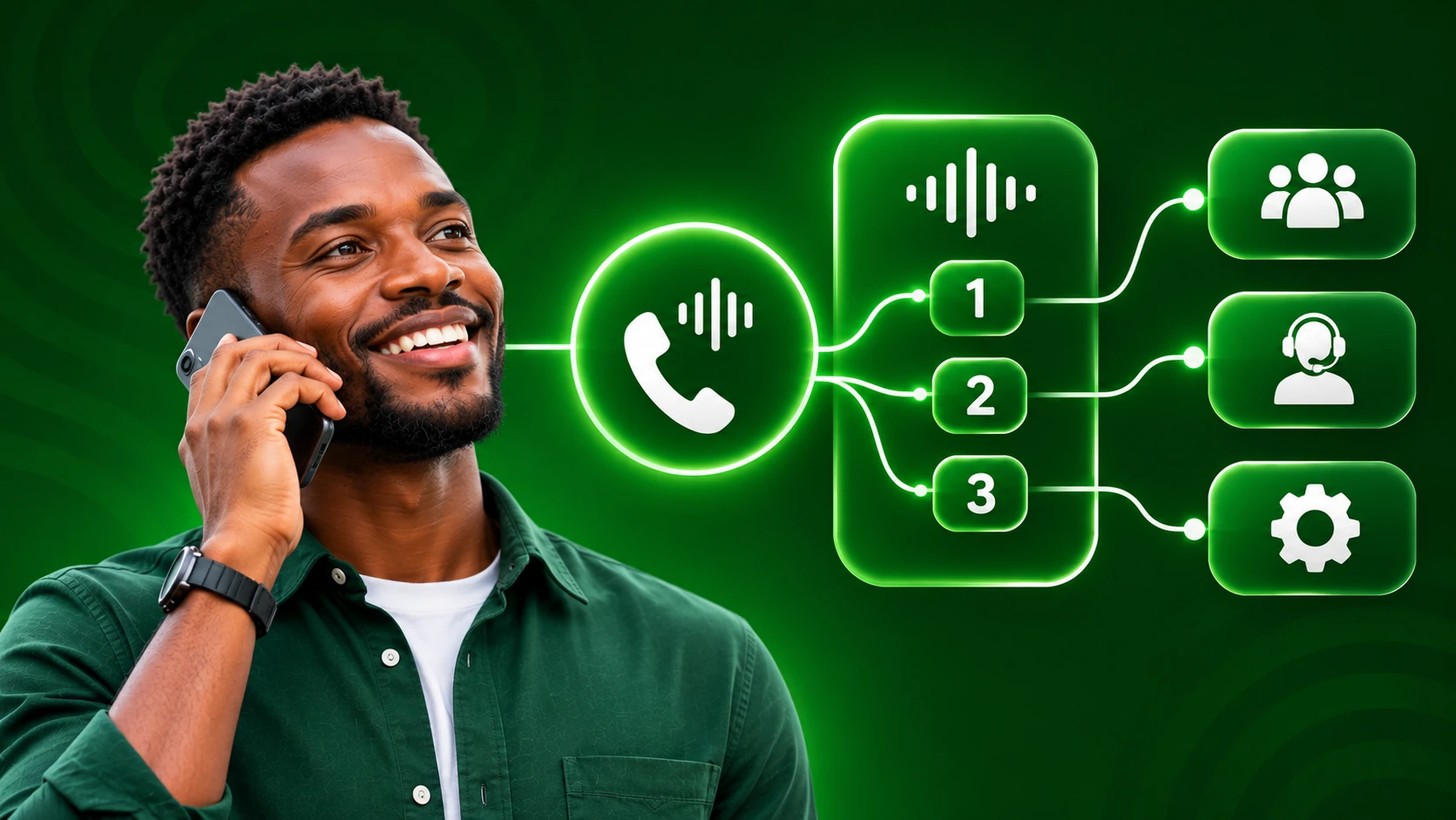
An IVR asks callers to press numbers, while an AI receptionist lets them talk. Interactive voice response, or IVR, is the familiar "press 1 for sales, press 2 for support" menu. It is fixed: the caller can only choose from the options you recorded, and it cannot answer a question it was not built for. Our guide to how interactive voice response works covers this in detail.
An AI receptionist is flexible. A caller can ask "Mnafunga saa ngapi leo?" or "Do you deliver to Mbezi?" and get a direct answer without going through any menu. The two work well together. Many businesses keep a short IVR phone menu in Swahili and English to route calls to the right team, and use the AI receptionist when that team is busy or closed.
They are close relatives, but they work in different channels. A chatbot answers typed messages on WhatsApp, a website or social media. An AI receptionist answers spoken phone calls. The thinking part can be the same. At Notify Africa, the AI receptionist is the same agent that powers our AI assistant for WhatsApp and website chat, so it gives callers and chat users the same answers from the same business knowledge.
The phone brings challenges that chat does not. Callers speak at different speeds, with background noise from traffic, markets or a busy shop, and they often switch between Swahili and English in one sentence. A good AI receptionist has to handle all of that and still sound polite and natural.
An AI receptionist answers a call by listening, understanding, replying and, when needed, handing over to a person. Here is what happens on a typical call, step by step.
The customer dials your business number from any phone, on any network.
The AI receptionist picks up and greets the caller with your business name, for example "Karibu Mushi Traders, nikusaidie nini?"
The caller explains what they want in their own words.
Speech recognition turns the caller's words into text, and the system works out the request: opening hours, a price, a location, an order or a complaint.
It looks for the answer in the information you have given it and writes a short reply.
It speaks the reply and checks whether the caller needs anything else.
If the caller asks for a person, or the question is outside what it knows, it transfers the call to a staff member and tells them why.
The call is logged, so your team can see who called, what they asked and how the call ended.
Most calls a business receives are short and repetitive, so a large share of them can finish at step 6. The calls that need judgement, negotiation or a personal touch reach a human at step 7, with context already attached.
An AI receptionist answers from the business knowledge you give it, not from guesswork. Typically this includes your website, your frequently asked questions, price lists, opening hours, branch locations, delivery areas and policies such as returns or appointment rules.
That is why the quality of its answers depends on the quality of your information. If your price list is out of date, the AI receptionist will quote old prices. If your FAQ says nothing about weekend hours, it won't know them. The best results come when one person owns the knowledge and updates it whenever something changes, in the same way you would brief a new receptionist.
A well-set-up AI receptionist is also told what not to do. If the answer is not in its knowledge, it should say so and offer to connect the caller to a person, rather than invent an answer.
Modern speech recognition is trained on large amounts of recorded speech, and Swahili is now well represented. Open projects such as Mozilla Common Voice have collected hundreds of hours of Kiswahili recordings from volunteer speakers to help train speech recognition systems.
In practice, an AI receptionist built for East Africa can follow a caller who speaks Swahili, English or a mix of both. It handles everyday phrases well, such as "naomba bei ya cement", "nataka kubook appointment" or "mko wazi Jumapili?" It is less reliable with heavy slang, very noisy lines or uncommon local place names. That is why you should test it with real calls in your first week, and why a quick route to a person always matters.
Answer Every Call, Even When Your Team Is Busy
Get one business number, a Swahili and English call menu and an optional AI receptionist with Notify Africa.
Get Your Business NumberAn AI receptionist can answer 24/7 because it is software running in the cloud. It does not need shifts, breaks or overtime, and it can take several calls at the same moment. Most businesses do not put it in front of every call, though. They use it in three situations: when the business is closed, when every staff member is busy, and when a call goes unanswered for too long.
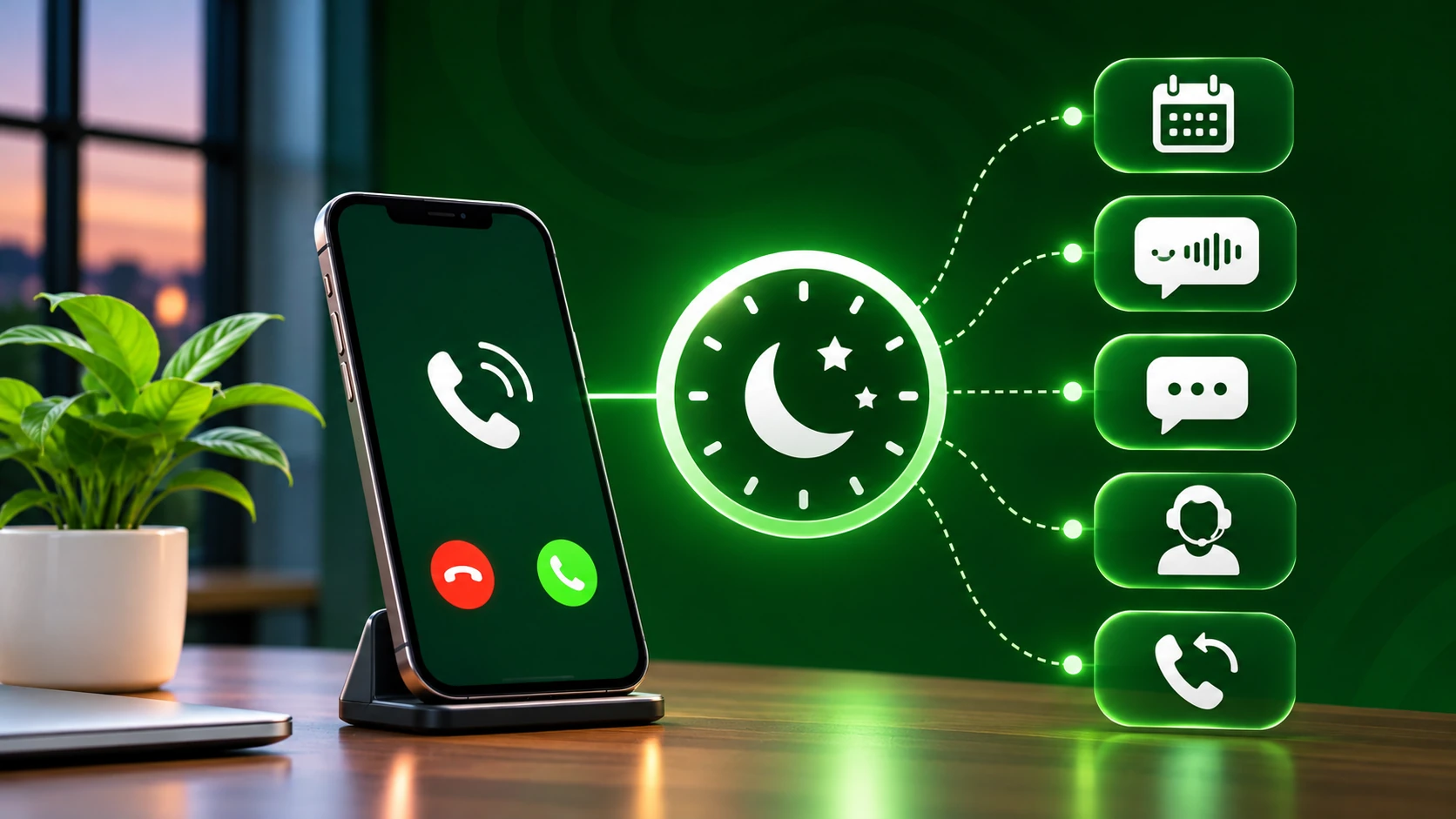
After hours, the AI receptionist becomes the only answer your callers get, so it should be set up to handle the questions people ask at night. These are usually: when do you open, where are you, how much does it cost, and can someone call me back? It can answer the first three directly and take the details for the fourth, so your team starts the morning with a list of people to call.
This matters more in Tanzania than many owners realise. Customers often call in the evening, after their own working day, and a phone that rings out tells them to try someone else. Our guide to handling customer calls outside business hours compares the AI receptionist with simpler options such as an out-of-office message and an automatic text back.
During the day, the AI receptionist acts as an overflow. Calls ring your team first. If nobody picks up within a set time, the AI receptionist answers instead of the caller hearing endless ringing. This is especially useful at peak times, such as Monday mornings, month end, school opening week or the first days of a promotion.
It works best alongside clear ringing rules for your team, such as ringing everyone at once or taking turns. Our guide to managing customer calls when several staff answer the phone explains how to set those rules so the AI receptionist only catches the overflow.
When the AI receptionist cannot help, it should hand the call to a person quickly and without making the caller repeat themselves. A good handover has three parts: it recognises that it should step aside, it connects the caller to the right staff member, and it tells that staff member why the call was passed on and what it was about.
There are two common triggers. The first is the caller asking for a person ("naomba niongee na mtu"), which should always be respected straight away. The second is a question outside the AI receptionist's knowledge or permissions, such as a complaint, a refund, a medical concern or a custom quote. If no one is available to take the handover, the AI receptionist should take the caller's details and promise a call back, and your team should keep that promise.
See an AI Receptionist Answer in Swahili
Book a free demo with our Dar es Salaam team and hear how your calls would be handled.
Book a DemoAn AI receptionist handles the routine calls that take up most of a receptionist's day. The most valuable tasks are:
Answering frequently asked questions, such as opening hours, prices, locations, delivery areas and required documents
Telling callers how to pay, for example which mobile money or bank details to use, as long as you have given it that information
Taking a caller's name, number and reason for calling so your team can call back
Sending callers to the right person or department
Giving directions using local landmarks you have written down, such as "opposite the Total petrol station on Bagamoyo Road"
Explaining simple processes, such as how to register, enrol, book or open an account
Handling calls in Swahili and English without needing separate staff for each language
Because the AI receptionist and your messaging can share the same knowledge, a call can also continue in writing. With Notify Africa, a call can be followed by an automatic text using bulk SMS, or a message on WhatsApp on the Business and Growth plans. That lets you send the caller the price list, location pin or payment details they asked about.
An AI receptionist should not make decisions that need human judgement, authority or professional responsibility. Keep these with your staff:
Medical advice, diagnosis or triage at a clinic or pharmacy
Approving loans, refunds, discounts or credit
Legal or financial advice
Collecting card numbers, PINs or passwords over the phone
Promising prices, dates or stock that are not in its knowledge
Handling distressed callers, emergencies or serious complaints
Setting these limits protects your customers and your reputation. It also makes the AI receptionist more useful, because callers learn that it answers what it can and passes everything else to a person straight away.
Businesses benefit most when they get many repeat questions, receive calls outside working hours, or have small teams who cannot always reach the phone. The examples below are illustrative, but they reflect the calls these sectors typically receive.
Clinics and pharmacies. Callers ask about opening hours, which doctors are in on which days, consultation fees and whether a medicine is in stock. The AI receptionist answers the routine questions and takes appointment requests. Anything about symptoms goes to a staff member.
Schools and colleges. Parents call about fees, admission requirements, reporting dates and uniform. Calls peak at the start of term and after results are released. An AI receptionist answers the same ten questions hundreds of times without getting tired, and staff deal with individual cases.
SACCOs and microfinance institutions. Members ask about branch hours, how to make a contribution, loan requirements and meeting dates. The AI receptionist explains the process and connects the caller to an officer for anything involving their personal account.
Hotels, lodges and tour operators. Guests and agents call at all hours and from different time zones, asking about availability, rates, transfers and directions. The AI receptionist answers in English or Swahili and takes booking enquiries, so reservations staff can follow up during the day.
Hardware shops, distributors and retailers. Customers ask about prices, stock, delivery areas and payment options. The AI receptionist gives the standard answers and passes large orders and negotiations to the sales team.
Solar and utility companies. Customers call to report faults or ask about payments, often in the evening when the lights do not come on. The AI receptionist records the fault details and the caller's location so the technical team can act the next morning.
If you are not sure whether calls are costing you business, our guide to lost sales from missed calls shows how to estimate the value of the calls you miss each month.
An AI receptionist works well in Tanzania when it is built for how Tanzanians actually call: in Swahili first, often from basic phones, and with an expectation of reaching a real person when it matters. Look for these six things.
Swahili First, Not Swahili as an Afterthought
Many callers will start in Swahili, and many will mix in English. The AI receptionist should greet callers in the language your customers expect, understand both languages throughout the call, and use natural, polite Swahili rather than a stiff word-for-word translation. Have a native speaker on your team review the greeting and common answers before you go live.
It Works on Any Phone
Your customers should not need a smartphone, an app or data to reach your AI receptionist. A normal phone call from any network, including from a basic kitochi handset, should be enough. This keeps it accessible to every customer, not only those who are online.
There Is Always a Route to a Person
The fastest way to lose a caller's trust is to trap them with a machine. Callers should be able to ask for a person at any point and be connected, or have a call back arranged if nobody is free.
It Is Honest About Being AI
Callers should know they are speaking to an automated assistant. A simple line such as "Mimi ni msaidizi wa kidijitali wa Mushi Traders" sets the right expectation. Transparency is one of the core principles in UNESCO's Recommendation on the Ethics of Artificial Intelligence, and it also prevents the frustration of callers discovering it halfway through a call.
It Respects Data Protection
An AI receptionist collects personal data such as names, phone numbers, call recordings and transcripts. In Tanzania, that processing falls under the Personal Data Protection Act, 2022, which is overseen by the Personal Data Protection Commission. In practice, tell callers that calls may be recorded, only collect what you need, keep recordings for a sensible period and choose a provider that takes information security seriously. This is general information, not legal advice. Speak to a lawyer about your own obligations.
There Is Local Help When You Set It Up
Setting up an AI receptionist well depends on good business knowledge and good call rules. A provider with a local team who can help in Swahili and English, and who understands Tanzanian networks and customers, will get you live faster and with fewer surprises.
The phone remains how most Tanzanians reach a business. TCRA's quarterly communication statistics show mobile subscriptions now exceed the country's population, so getting phone answering right is not a side project.
The Notify Africa AI receptionist is an optional extra on Notify Africa Call Center. It answers your business number in Swahili and English, 24/7, using your business knowledge. It is the same AI agent you can use on WhatsApp and your website, so customers get consistent answers whichever channel they use.
You decide when it answers. Most businesses use it after hours, when staff are busy, or as the fallback when nobody picks up. It hands the call to a person when the caller asks or when it cannot help, and whoever picks up sees why the call was handed over and what it was about. Here is how it fits into the rest of the call center:
One business number that customers can call from any network in Tanzania, including from basic phones
A call menu in Swahili and English, started from a template you listen to before saving
Team ringing, with everyone ringing at once or taking turns, and answering in the browser or on a mobile
A fallback to a mobile or a text back if nobody answers within 20 seconds
A call-back list for every missed call, with call back in one click
Call recordings kept for 30, 90 or 365 days depending on your plan, with transcripts sent to your email
Missed-call text back on every plan, and WhatsApp follow-up on Business and Growth
Notify Africa is built by iPF Softwares, which is certified to ISO 27001:2022 for information security. Our Dar es Salaam team helps with setup in Swahili or English, and a new business number is usually ready in 1 to 2 working days.
What Does an AI Receptionist Cost?
Notify Africa Call Center plans start at TZS 99,900 a month, VAT included, with a one-time setup fee. Every plan includes call minutes and SMS. The AI receptionist is added on top of your plan, so the right price depends on your call volume and how you plan to use it. Compare the plans on our pricing page, then talk to our team about adding the AI receptionist.
When you compare costs, set the price against what you would otherwise pay: a second receptionist, overtime for evening cover, or the sales you lose to calls that go unanswered.
Start With One Business Number
Set up your call center in 1 to 2 working days, then add the AI receptionist when you are ready.
Get StartedAn AI receptionist is probably right for you if two or more of these are true:
You miss calls most days, either because staff are busy or because nobody is free to answer
Customers call in the evening, early morning or at weekends
Most of your calls ask the same handful of questions
You get call spikes at certain times of the month or year
You want to offer service in both Swahili and English without hiring separately for each
You are considering a second receptionist mainly to cover hours, not to handle complex work
It is probably not the first thing you need if you receive very few calls, if most calls need detailed professional judgement, or if you don't yet have a shared business number. In that last case, start with one number and a simple call menu, then add the AI receptionist once you can see your call patterns.
An AI receptionist answers your business phone calls and talks with callers in a natural voice. It greets them, understands what they are asking, answers common questions from your business information, takes details for a call back, and transfers calls to the right person when needed. Typical questions it handles include opening hours, prices, locations, delivery areas and how to pay. It works alongside your team rather than replacing them, covering the times when nobody can reach the phone, such as after hours, during busy periods or when all staff are already on calls.
Yes. An AI receptionist runs in the cloud, so it does not need shifts, breaks or sleep, and it can answer several calls at the same time. You choose when it answers. Some businesses use it only after hours, some as an overflow when staff are busy, and some as a fallback when a call rings for too long. Whatever you choose, make sure there is a plan for the calls it passes on, such as a call-back list your team works through first thing each morning.
A good AI receptionist built for East Africa understands and speaks both Swahili and English, and can follow callers who mix the two. Notify Africa's AI receptionist answers in Swahili and English. It handles everyday conversation well. Very heavy slang, noisy lines and uncommon place names can still cause mistakes, so test it with real calls during your first week and adjust your business information. Have a native Swahili speaker review your greeting and common answers so they sound natural rather than translated.
An IVR phone menu asks callers to press numbers, such as "press 1 for sales", and can only offer the options you recorded. An AI receptionist lets callers speak in their own words and answers their questions directly. IVR is good for routing calls quickly to the right team. The AI receptionist is good for answering questions and handling calls when that team is unavailable. Many businesses use both: a short menu to route calls during working hours, and the AI receptionist after hours or when lines are busy.
They should. Tell callers in the greeting that they are speaking with a digital assistant, for example "Mimi ni msaidizi wa kidijitali." Being open about it builds trust, sets realistic expectations and avoids the frustration of callers finding out halfway through. It also follows widely accepted principles of transparency in the use of artificial intelligence. The most important thing is that callers can ask for a person at any time and are connected, or have a call back arranged if nobody is free.
Yes, and it should be quick to do so. The Notify Africa AI receptionist hands the call to a person when the caller asks or when it cannot help. Whoever picks up sees why the call was handed over and what the caller asked about, so the caller does not have to repeat everything. If nobody is available, set it up to take the caller's details so your team can call back. Callers forgive an automated first answer far more easily than a dead end.
It needs the same information you would give a new receptionist: your opening hours, branch locations with landmarks, services, price list, delivery areas, payment options, booking or enrolment steps, and your answers to common questions. It also needs clear rules about what it must not handle, such as refunds, medical questions or account-specific details, and who to pass those calls to. Keep this information in one place and update it whenever something changes, because outdated knowledge produces outdated answers.
It can be, if you set it up responsibly. Calls involve personal data such as names, phone numbers, recordings and transcripts, which in Tanzania fall under the Personal Data Protection Act, 2022. Tell callers that calls may be recorded, collect only what you need, keep recordings for a sensible period, and never ask callers for card numbers or PINs. Choose a provider with strong information security. Notify Africa is built by iPF Softwares, which is ISO 27001:2022 certified. This is general information, not legal advice.
In most businesses, no. An AI receptionist takes the repetitive calls and covers the hours and busy moments your team can't, which frees your receptionist for visitors, complaints, sales and anything that needs judgement. Small businesses that have never had a receptionist often use it to stop missing calls without adding headcount. Larger businesses use it to cut waiting times at peak periods. The best results come from treating it as a member of the team with a clear role, not as a replacement for people.
Costs depend on the provider, your call volume and how often the AI receptionist answers. With Notify Africa, the AI receptionist is an optional extra on top of a Call Center plan. Plans start at TZS 99,900 a month, VAT included, with a one-time setup fee, and include call minutes and SMS. Our team will recommend the right setup once they understand your call patterns. When comparing costs, include what you would otherwise spend on evening cover or extra staff, and the value of the calls you currently miss.
An AI receptionist gives your business a reliable first answer on every call, at any hour, in Swahili and English. It does not replace your team. It makes sure no caller hears endless ringing while your team is busy or closed.
The key points to remember:
An AI receptionist listens, understands and replies in a natural voice, using the business knowledge you give it.
It works best after hours, as an overflow when staff are busy, and as a fallback for unanswered calls.
It should always offer a quick route to a person and be honest that it is an automated assistant.
In Tanzania, Swahili support, access from any phone and responsible handling of personal data matter as much as the technology itself.
You now know what to look for and how to judge whether it suits your business. When you are ready, our Dar es Salaam team can show you how the Notify Africa AI receptionist would answer your own callers.
Hear Your Calls Answered the Right Way
Talk to our team about adding an AI receptionist to your Notify Africa business number.
Talk to our team
A solution by iPF Softwares, an ISO 27001:2022 certified software development company.