 AI Chatbots
How You Can Generate Leads Automatically Using Chatbots (24/7)
Fauzia Ibrahim
Last Updated :
23rd May 2026
By Fauzia Ibrahim
Product Specialist
Share this article with your friends
Quick Answer: AI chatbots generate leads by engaging website and social visitors instantly, asking qualifying questions, capturing contact details, and routing hot prospects to your sales team — all automatically, around the clock. To use one effectively, define a single conversion goal, train the bot on your products and FAQs, deploy it across the channels your customers already use, and connect it to follow-up tools like SMS and WhatsApp.
Most leads die in the gap between interest and reply. A customer lands on your website at 9 p.m., has a question about pricing, fills nothing in because no one is online, and is gone by morning — usually to a competitor who answered faster. For Tanzanian businesses competing for the same pool of customers, that silent gap is where revenue leaks out every single day.
AI chatbots close that gap. An AI chatbot for lead generation is a software agent that talks to visitors in plain language, answers their questions instantly, qualifies whether they're a real prospect, and captures their details before they leave — without a human lifting a finger.
This guide walks through exactly how to set one up, what to train it on, where to deploy it, and how to turn the conversations it captures into closed sales. It's written for SME owners, marketers, and operations leads who want more qualified leads without hiring a bigger team.
An AI chatbot for lead generation is an automated conversational agent that engages potential customers, collects their information, and qualifies them as sales-ready — replacing the static contact form with a live, two-way conversation.
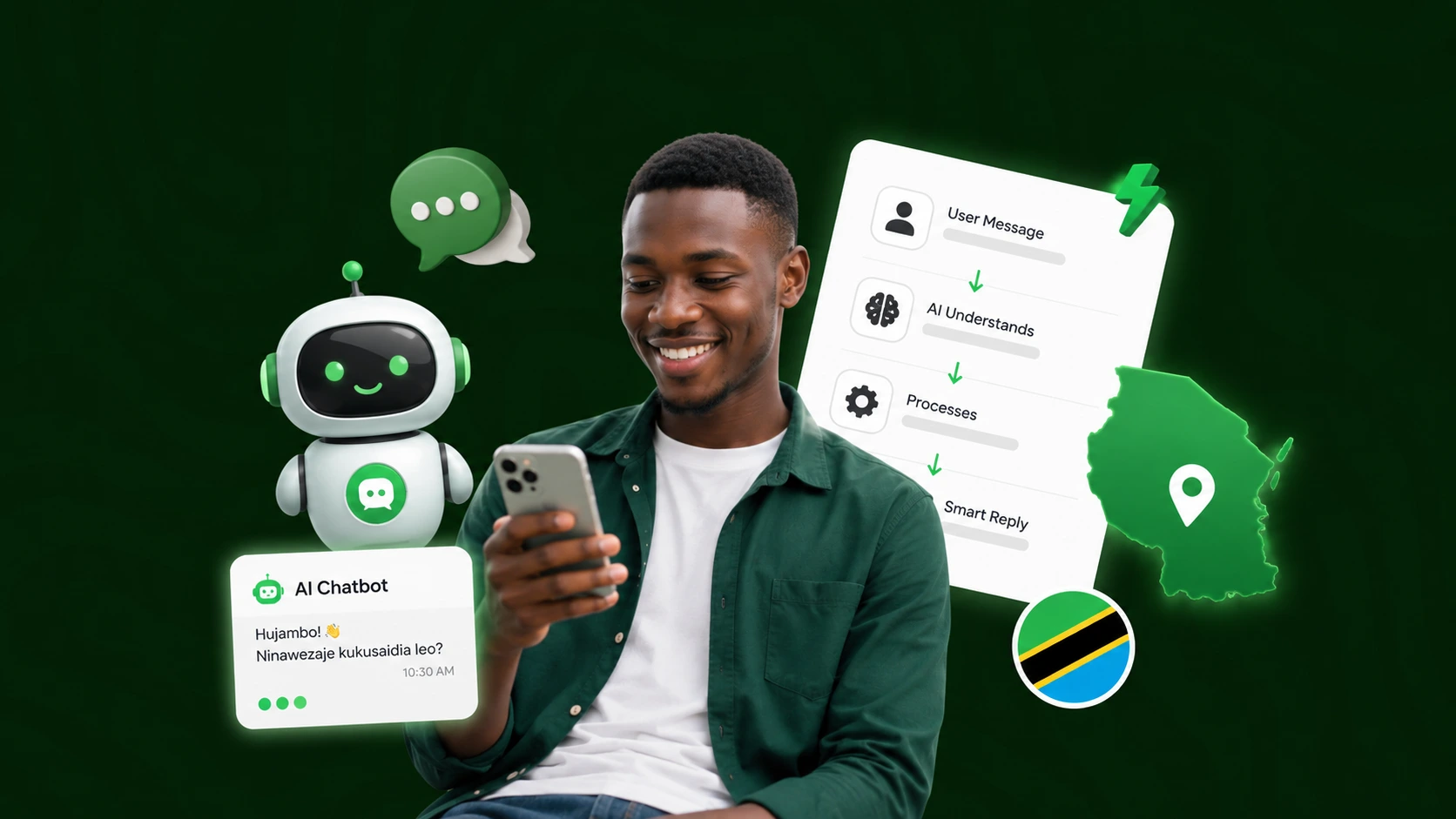
Unlike older "rule-based" bots that could only follow rigid if-then scripts, modern AI agents are powered by large language models. They understand questions phrased in everyday Swahili or English, hold a natural conversation, pull accurate answers from your business documents, and adapt to what each visitor actually asks. The result feels less like a robot and more like a knowledgeable sales assistant who never sleeps.
Both run on the same technology, but their goals differ. A support bot exists to resolve a problem and close the ticket. A lead generation bot exists to start a relationship and open an opportunity. A good lead bot does three things a support bot doesn't: it proactively engages browsing visitors, it asks qualifying questions, and it captures contact details for follow-up. In practice, one well-built AI agent can do both jobs at once — answering a support question and quietly capturing a lead in the same chat.
Why This Matters Now
Customer patience has collapsed. According to Tidio's chatbot research, the overwhelming majority of customers would rather talk to a chatbot than wait for a human, and only a small fraction are willing to wait even 15 minutes for a live agent.
Speed of first response is now one of the strongest predictors of whether a lead converts at all — classic sales research published by Harvard Business Review found that companies replying within an hour were vastly more likely to qualify a lead than those that waited longer. A chatbot replies in seconds, every time.
See What An Always-On AI Agent Could Capture For You
Notify Africa's AI agent answers, qualifies, and captures leads 24/7 — even while you sleep
Start NowBecause the audience is already on mobile, already messaging, and already expecting instant answers. Tanzania's digital base is enormous and growing fast: the Tanzania Communications Regulatory Authority (TCRA) reported total mobile subscriptions reaching 106.9 million by December 2025, with smartphone penetration climbing past 41%. Your customers live on their phones — and the businesses that meet them there with instant, conversational engagement win the lead.
There are four concrete reasons AI chatbots are a strong fit for the local market.
They work outside business hours. Many buying decisions happen in the evening or on weekends. A bot captures those leads while your office is closed, instead of losing them to morning silence.
They speak the customer's language. A well-trained AI agent handles both Swahili and English fluently, removing the friction that pushes prospects away.
They scale without headcount. One agent can hold thousands of simultaneous conversations during a campaign spike, something no human team can match.
They connect to the channels people already use. Capturing a lead is only step one — the follow-up is where deals close, and that follow-up runs naturally over SMS and WhatsApp.
Mobile money alone shows how comfortable Tanzanians are transacting on their phones, with services like M-Pesa, Mixx by Yas, and Airtel Money dominating daily commerce. A customer who routinely pays by phone has zero hesitation about asking a business a question by chat. That behaviour is exactly what an AI lead agent is designed to capture and act on.
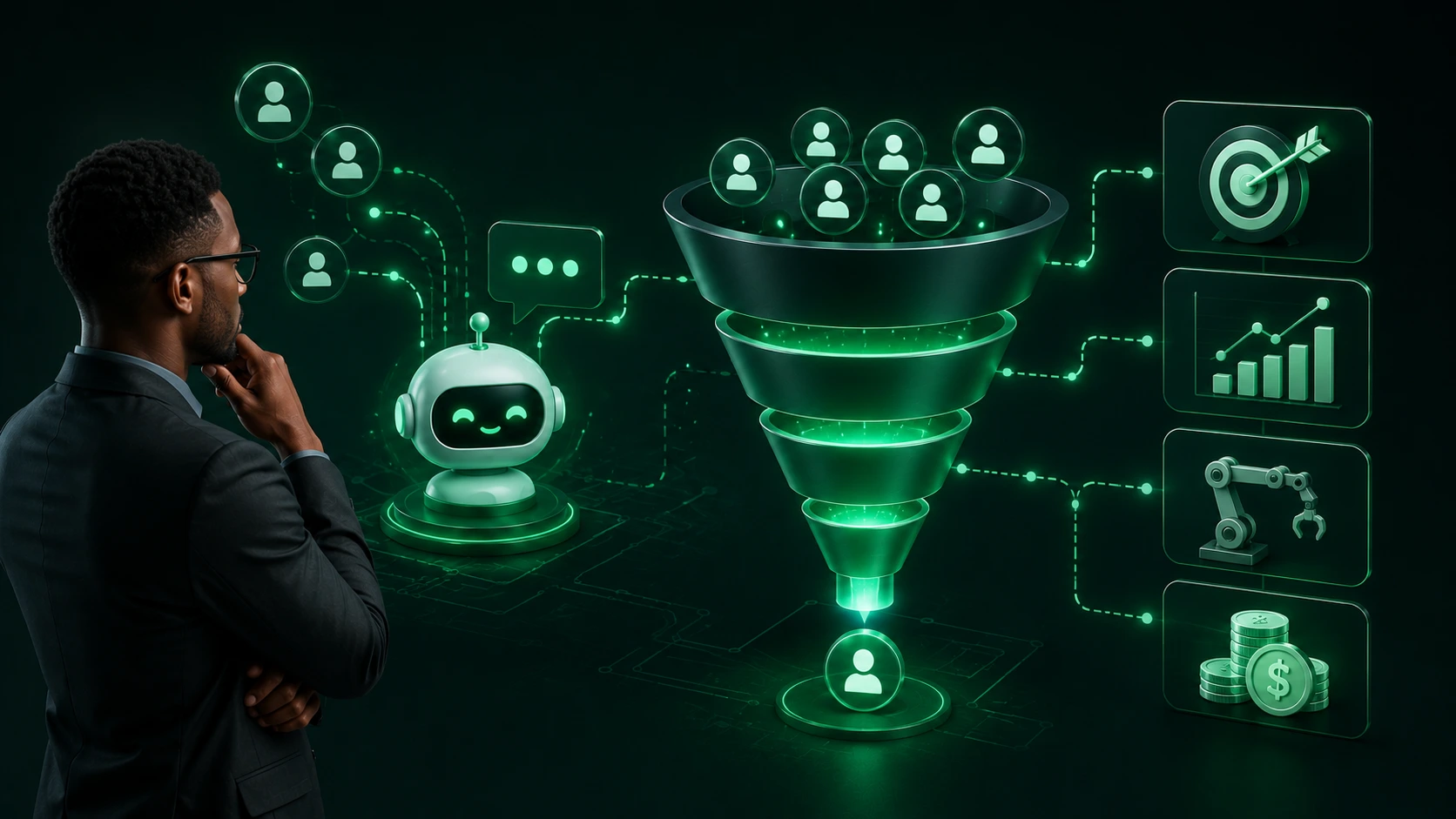
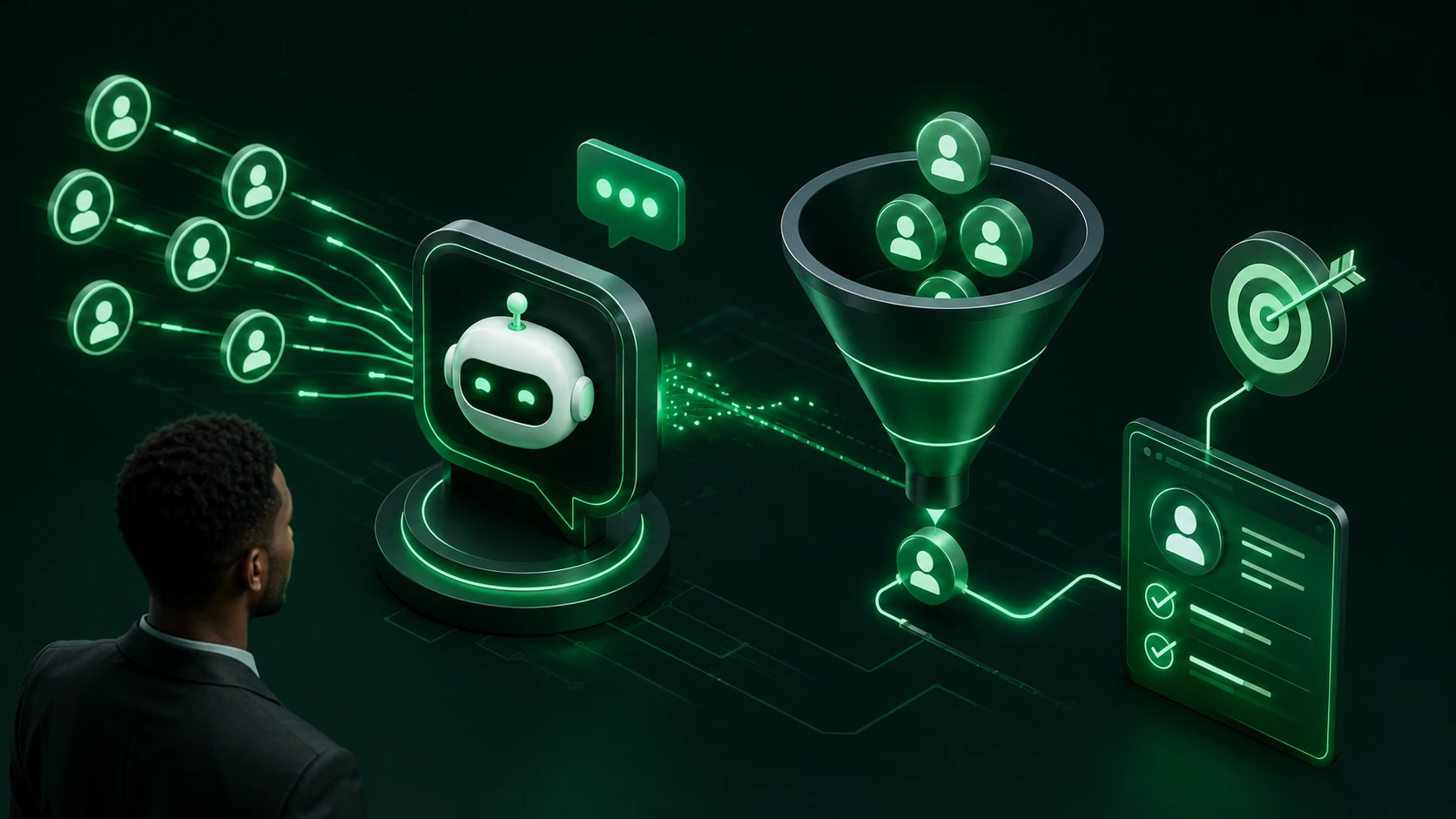
AI chatbots capture leads by starting a conversation at the moment of interest and qualify them by asking targeted questions that reveal budget, need, and intent — then handing the best prospects to your team. The process follows a clear, repeatable flow.
The bot triggers based on visitor behaviour — time on page, a returning visitor, or a click on a pricing or product section. Instead of waiting passively, it opens with a relevant, non-pushy prompt: "Looking for bulk SMS pricing for your business? I can help." Proactive engagement turns silent browsers into active conversations.
Before you can capture a lead, you have to earn the conversation. The bot pulls accurate answers from your trained knowledge base — pricing, delivery times, supported networks, payment methods — so the visitor gets real value immediately. This is where trust is built and where weak bots fail: a bot that gives vague or wrong answers loses the lead faster than no bot at all.
Once the visitor is engaged, the bot asks two or three short questions designed to separate serious prospects from casual browsers — business size, what they're trying to solve, and timeline. This is the single biggest advantage over a static form: a form collects data; a conversation reveals intent. Research consistently shows that the majority of companies using chatbots report better-quality leads, precisely because the bot filters out the unqualified before they ever reach a salesperson.
Rather than demanding a name and number upfront, the bot asks for contact details after delivering value — at the point where the customer wants a quote, a demo, or a callback. Phrased as a benefit ("I'll send your custom quote by SMS — what's the best number?"), the ask feels helpful, not extractive, and completion rates climb.
Qualified leads are scored and routed instantly: hot prospects get flagged to your sales team for an immediate human follow-up, while everyone else enters an automated nurture sequence. A smart agent knows its limits and hands off to a human at the right moment — the smoothest handoffs are where chat-driven sales actually close.
Stop Losing After-Hours Leads
Every unanswered chat is a customer who found someone else. Let an AI agent answer first.
Book A Free DemoTrain your AI chatbot on the exact information a customer needs to make a buying decision — your products, prices, policies, FAQs, and the questions your sales team hears every day. The quality of a lead bot is determined almost entirely by the quality of its training. A bot trained on thin or outdated material produces thin, frustrating conversations.
With Notify Africa's AI agent, you can train the system in minutes by uploading your existing website content, FAQ documents, and business files — no technical setup required. Focus your training material on these sources:
Your real FAQ list — the actual questions customers ask, in their actual words, including the awkward ones about price and payment.
Product and service pages — features, use cases, and who each solution is for, so the bot can match a need to an offering.
Pricing and payment information — even ranges help; ambiguity here is the number-one reason chats stall.
Objection responses — how your best salesperson answers "it's too expensive" or "we already use someone else."
Brand voice and rules — tone, what the bot should never say, and when it must escalate to a human.
A lead bot is a living asset, not a one-time install. Review its conversation logs weekly for questions it answered poorly or couldn't answer at all, then feed those gaps back into training. The bots that convert best are audited continuously, which is why even high-performing AI agents have their responses checked regularly to prevent drift and errors.
Deploy your AI chatbot wherever your customers already are — your website, WhatsApp, Instagram, Messenger, and SMS — so no lead falls through a channel gap. Limiting a bot to your website alone leaves most of your audience untouched, especially in a market where messaging apps dominate daily communication.
Your website is where buying intent is highest — visitors are already researching. A web chat widget catches them mid-decision, answers questions, and captures the lead before they click away. This is the foundation channel for most businesses.
In Tanzania, WhatsApp is where conversations actually happen. Deploying your AI agent here, alongside WhatsApp Business automation, means leads can reach you on the app they already check dozens of times a day — and your follow-ups land where they'll actually be seen.
Instagram and Messenger capture leads from your social campaigns, while SMS reaches every customer regardless of whether they have a smartphone or data. A unified agent works across all of them, so a conversation that starts on Instagram can continue by SMS without losing context.
One Agent, Every Channel
Reach customers on WhatsApp, web chat, Instagram, Messenger, and SMS — from a single AI agent.
Start Free TodayYou turn captured leads into sales by following up fast, consistently, and on the right channel — automating the nurture so no lead goes cold while a human focuses on closing. Capturing the lead is the start, not the finish. Most leads need several touches before they buy, and the businesses that win are the ones that follow up reliably.
The moment a bot captures a lead, an automated follow-up should fire — a confirmation message, a quote, or a next step. Pairing your AI agent with bulk SMS follow-ups means a captured lead receives an instant, personalised message on the channel with the highest open rates in the country. Speed compounds: the faster the first touch, the warmer the lead stays.
Not every lead buys today. For the ones still deciding, a sequenced nurture campaign — a useful tip, a case study, a limited-time offer — keeps your business top of mind until they're ready. This is where SMS drip sequences and WhatsApp broadcasts earn their value, turning a "maybe later" into a "yes" over days or weeks.
When a lead is clearly ready to buy, automation should step aside. The bot flags the prospect, passes the full conversation context to your sales team, and a human takes over to close. The combination — AI for speed and scale, humans for the final relationship — consistently outperforms either alone.
Track the metrics that tie back to revenue: conversations started, leads captured, qualification rate, and leads converted to customers. These numbers tell you which channels and which bot prompts are pulling their weight, so you can double down on what converts and fix what doesn't. If you're building custom workflows, the Notify Africa developer documentation shows how to wire chatbot leads directly into your own systems.
The difference between a bot that prints leads and one that annoys customers usually comes down to a handful of avoidable errors.
Asking for contact details too early. Demanding a phone number before delivering any value kills the conversation. Earn the lead first.
Training the bot on thin content. A bot that can't answer basic pricing or product questions erodes trust instantly. Garbage in, garbage out.
No human escape hatch. Trapping a frustrated customer in an endless bot loop is worse than no bot. Always offer a clear path to a human.
Deploying on one channel only. A website-only bot ignores the WhatsApp and SMS audiences where most local conversations live.
Capturing leads but never following up. A captured lead with no follow-up is a wasted lead. The nurture system matters as much as the bot.
Setting it and forgetting it. Bots drift without maintenance. Review conversations and retrain regularly.
Yes. A conversation captures more than a form because it engages visitors who would never fill in a form, answers their objections in real time, and qualifies them as it goes. Industry research consistently shows that visitors who engage with chat convert at meaningfully higher rates than those who don't, and that most companies using chatbots report better lead quality. The key is a well-trained bot — a poorly built one underperforms a good form.
A basic lead bot can go live quickly because training is as simple as uploading your existing website content, FAQs, and business documents. The system learns your business from those materials in minutes rather than requiring code. The ongoing work is refinement — reviewing conversations and improving answers — which is fast and continuous rather than a long upfront project.
No — it makes them more effective. The bot handles the repetitive, high-volume top of the funnel: answering common questions, qualifying, and capturing details around the clock. That frees your salespeople to spend their time on the warm, qualified leads who are ready to buy, where human relationship and persuasion actually close the deal. The best results come from AI and humans working together.
Final Thoughts
Using AI chatbots for lead generation is no longer an experiment — it's how growing businesses capture customers their competitors are losing in the after-hours gap. The playbook is straightforward: engage visitors at the moment of interest, answer their real questions, qualify them through conversation, capture their details, and follow up fast on the channels they already use.
A few things to carry with you:
A lead bot is only as good as what you train it on — feed it your real FAQs, prices, and objections.
Deploy across website, WhatsApp, and SMS, not just one channel.
Capture is the start; automated, instant follow-up is what turns leads into sales.
Keep a human in the loop for the final close and for any frustrated customer.
Notify Africa builds AI agents designed for exactly this — multi-channel, Swahili-capable, trained on your own content in minutes, and connected to the SMS and WhatsApp tools that make follow-up effortless. If you're ready to stop losing leads to silence, this is where to start.

A solution by iPF Softwares, an ISO 27001:2022 certified software development company.